


Christian Radich (Norwegian sail training ship)
MGTS17P-60
New product
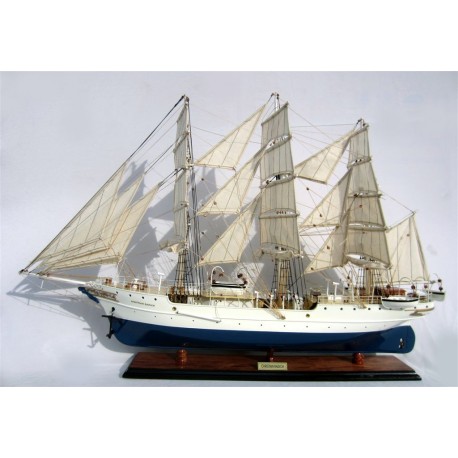
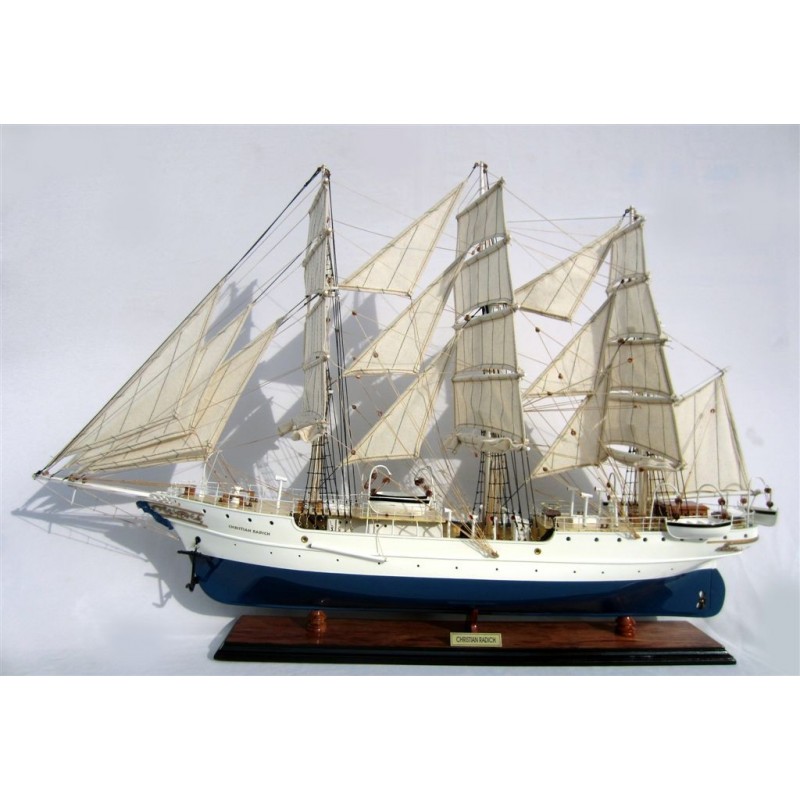
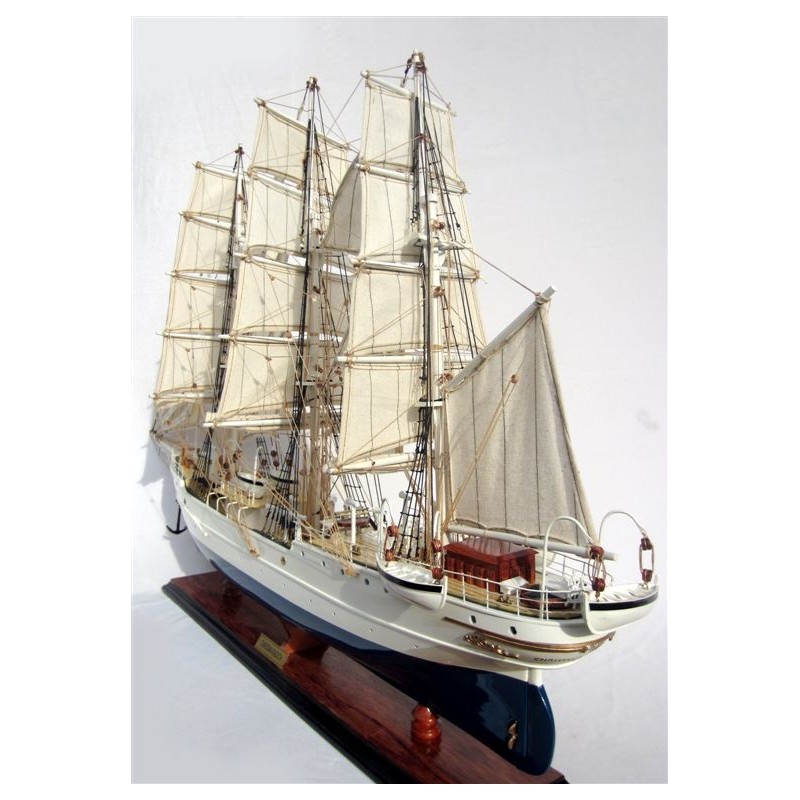
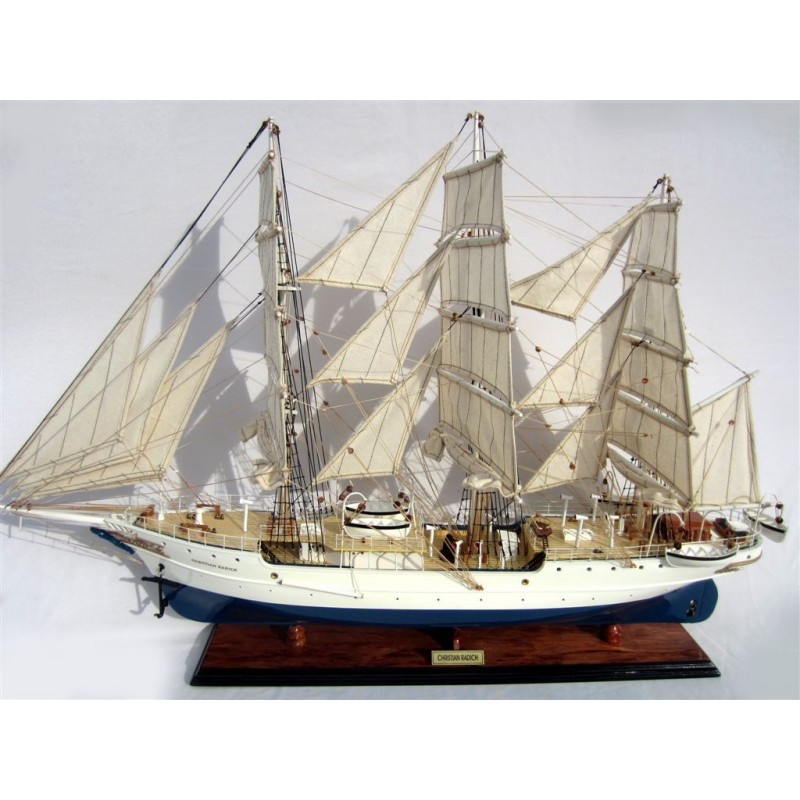
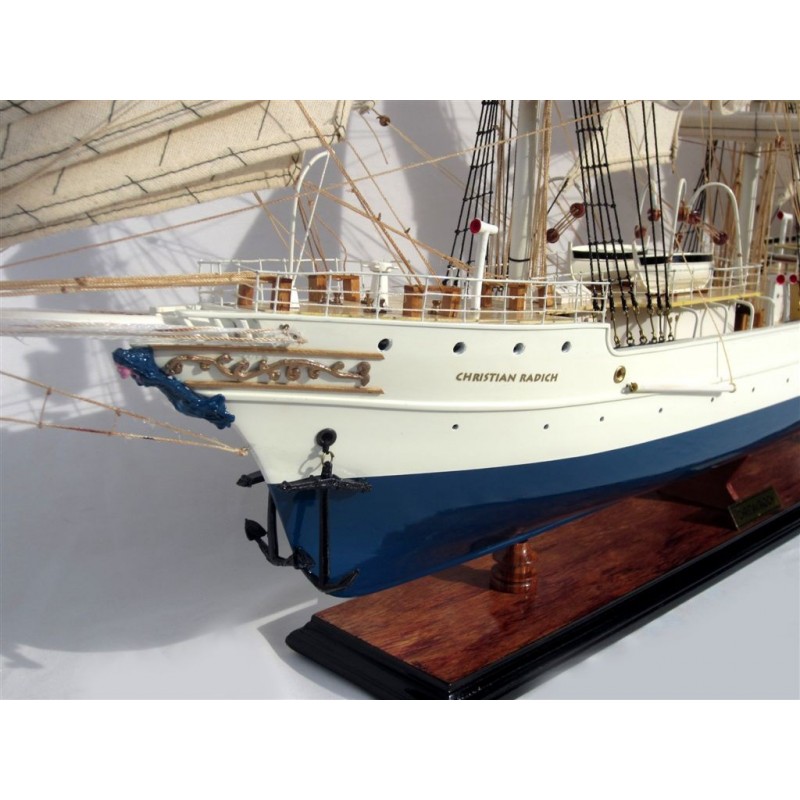
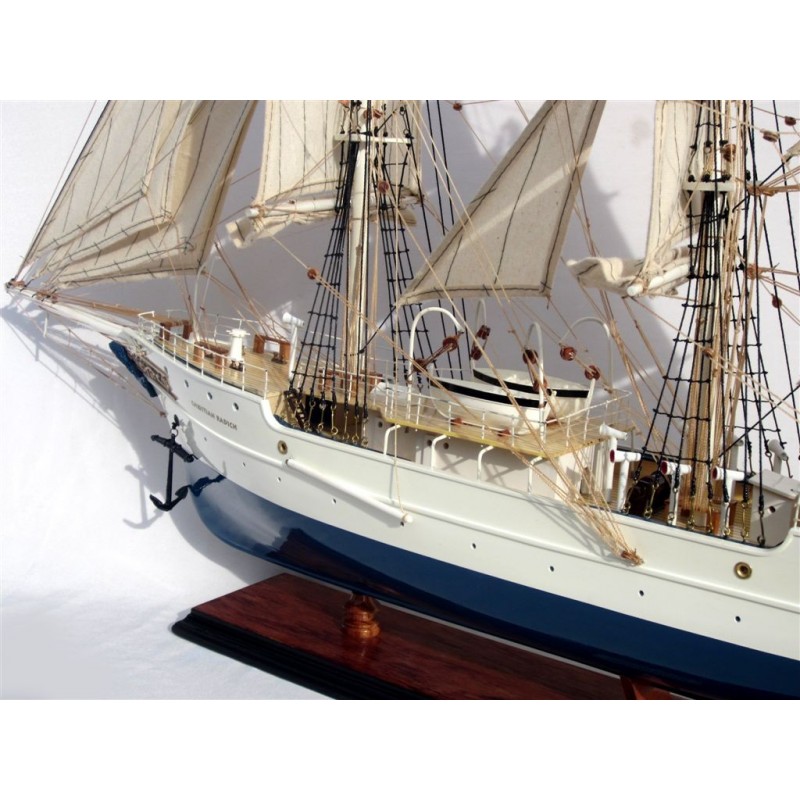
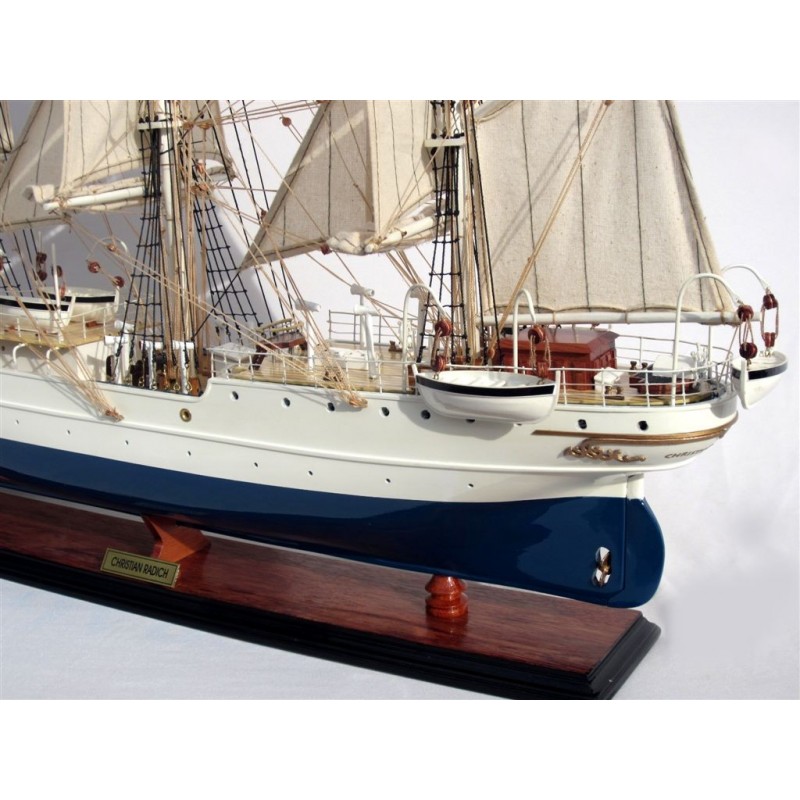
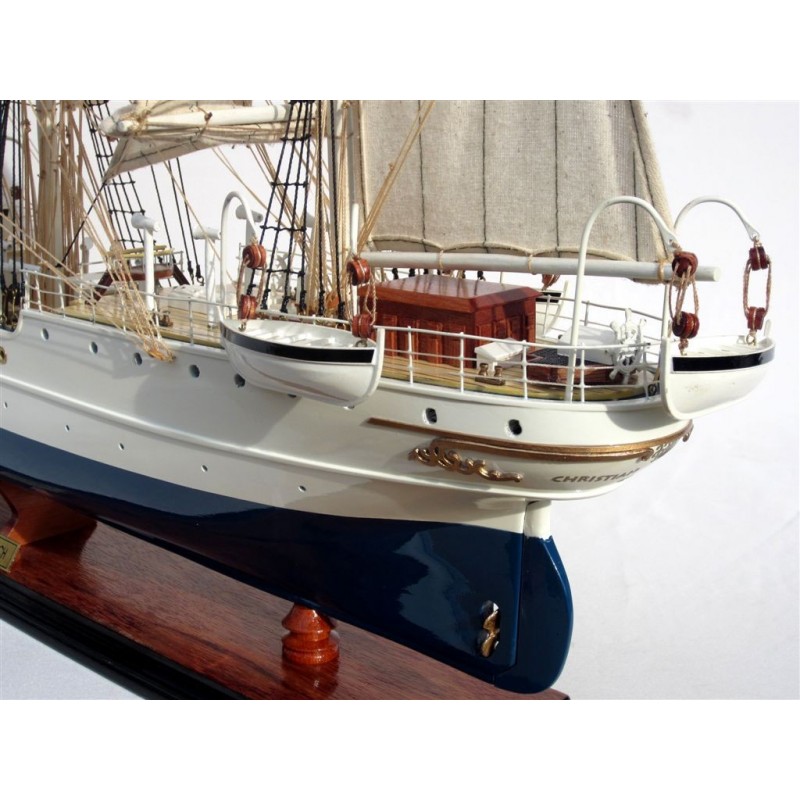
72cm model of the Norwegian Sail Training ship Christian Radich, launched in Sandefjord in 1936. Fully assembled and ready for display.
- Write a review
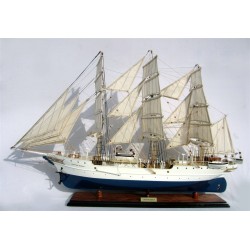
More info
Christian Radich is a Norwegian full-rigged ship built at Framnæs shipyard in Sandefjord, Norway. It was built as a training ship for The Christian Radich Sail Training Foundation and was named after an officer who generously funded the build.
The vessel is a full-rigged three-masted steel hull, 62.5 m long, with an overall length of 73 m including the bowsprit and a maximum width of 9.7 m. She has a draught of about 4.7 meters and a displacement at full load of 1050 tons. Under engine power, the Christian Radich reaches a top speed of 10 knots, while she can make up to 14 knots under sail.
The Christian Racich has 18 crew members and can accommodate 88 passengers. The ship is well known as it featured in several major film and TV productions – most notably the film Windjammer (1957) and the BBC TV series, The Onedin Line (1970’s), where she played herself.
The vessel was built for training sailors for the Norwegian merchant navy, and did so for many years. Since 1999 the ship has been on the charter market as well as sailing with paying trainees to foreign ports on summer trips, participating in large sail events in various European ports. She has distinguished herself in competition several times.
Christian Radich won the first race of the Tall Ships Race 2010 in Class A, from Antwerp to Skagen in Denmark, a distance of 787 km (489 mi) in just under 2 days with an impressive average speed of 10.2 knots, with the corrected time of 1 day 4 hours 29 minutes and 44 seconds, and won the overall race 2010, making this its 5th victory in the Tall ships Race.
Reviews
